
What to expect when you call a locksmith to open a safe
By Jacky Lee · Updated 2026-07-08
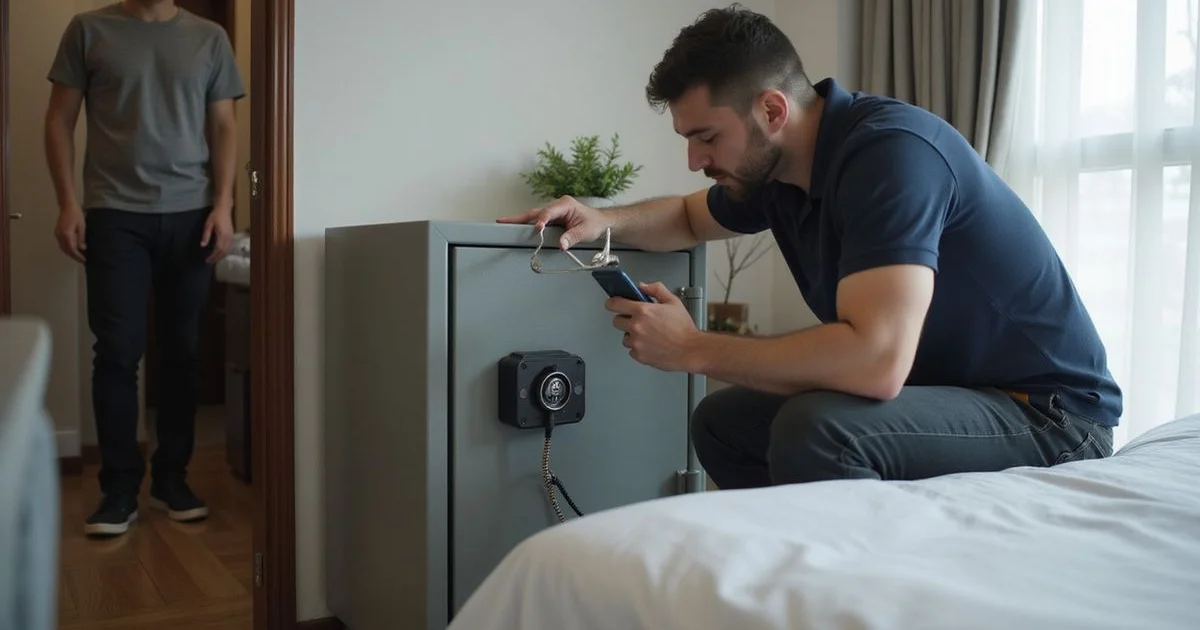
A locked safe feels different from a locked door. There’s usually something specific and valuable inside, and the mechanism is often less familiar than a standard door lock. Knowing what a proper safe opening visit involves helps you tell a careful, competent job from a rushed one.
Diagnosing the actual problem first
Before touching any tools, a good locksmith asks what’s actually wrong. A lost code, a low or dead battery on a digital keypad, a bolt that’s physically jammed, and a damaged lock body are four different problems with different fixes, and mixing them up leads to the wrong approach.
A battery or keypad fault is often the simplest fix, sometimes resolved with a battery change or a keypad reset rather than any invasive work. A lost code on a digital safe, where the mechanism itself still works fine, is usually solvable through manufacturer reset procedures or careful manipulation, depending on the model. A jammed bolt or mechanism is more involved and may need partial disassembly. A damaged lock body, from wear, a break-in attempt, or a previous bad repair, is the most serious case and sometimes can’t be fixed without replacing the lock entirely.
What determines whether the safe can be opened without damage
Digital home safes and office safes with electronic keypads are generally the most straightforward to work with, since many faults trace back to batteries or electronics rather than the physical lock. Mechanical combination safes and fireproof security safes are built with more resistance to manipulation by design, which is good for security but means a genuine fault takes more time and specialised tools to work through.
| Safe type | Typical opening approach |
|---|---|
| Small digital home safe | Battery check, keypad reset, or manufacturer reset procedure |
| Large digital or office safe | Similar to above, often with more complex electronics |
| Mechanical combination safe | Manipulation or specialised tools, more time-intensive |
| Fireproof security safe | Built for resistance, sometimes needs invasive methods if genuinely faulty |
What happens during the visit
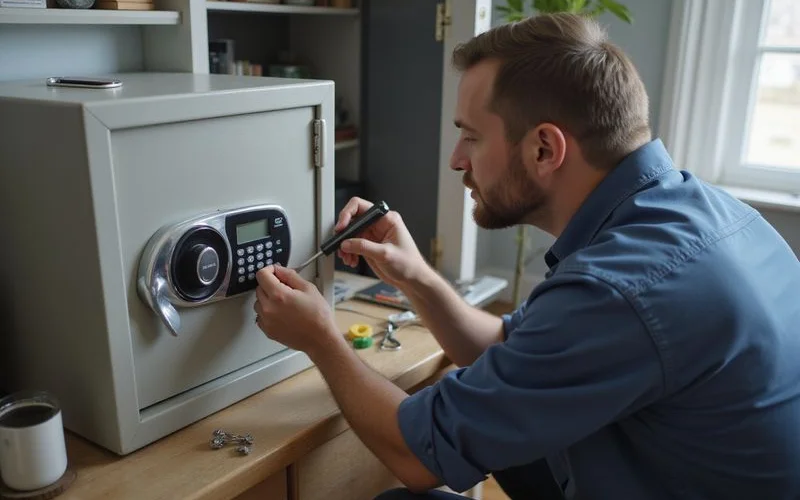
Expect the locksmith to inspect the safe, ask about its history (has it been opened recently, is the fault new or ongoing, do you know the make and model), and explain their plan before starting. For most digital safes, this starts with the least invasive option: checking the battery, trying a manufacturer reset, or working through the electronics before considering anything more drastic.
If non-invasive methods don’t resolve the issue, the locksmith should explain why before moving to a more involved repair or opening method. This mirrors how a good door lockout is handled: try the least damaging approach first, and be upfront if that’s not going to work.
After the safe is open
Once it’s open, ask what caused the fault in the first place. A worn battery is a simple fix going forward: replace it regularly and the issue shouldn’t recur. A mechanical fault or a lock body that’s been damaged is worth a longer conversation about whether repair or replacement makes more sense, especially if the safe is older or was already showing signs of wear before this incident.
A locksmith who’s upfront about this trade-off, rather than defaulting to the most expensive repair, is generally more trustworthy. Ask directly whether the safe is worth repairing given its age and condition, or whether a new unit would serve you better long-term.
Choosing who to call
Not every locksmith handles safes regularly, since it’s a more specialised skill than door and gate work. Our safe opening and repair category lists Singapore providers experienced with this specific job, scored through our ranking method using verified customer feedback.
If you’re comparing providers for the first time, our homepage lets you browse across every locksmith category, not just safes, in case you need other work done at the same visit.
Frequently asked questions
- Can a locksmith always open a safe without damaging it?
- Not always. It depends on the safe type and the fault. A lost code or a battery issue is often fixable without damage. A jammed bolt or a damaged lock body sometimes requires more invasive methods.
- How long does opening a safe usually take?
- A straightforward digital safe with a lost code or a flat battery can often be resolved in under an hour. Mechanical combination safes and safes with a genuinely faulty lock body take longer.
- Will I need to prove the safe is mine?
- Yes. A responsible locksmith asks for identification and some proof the safe belongs to you or your business before opening it, similar to how they'd verify a property lockout.
- Is it worth repairing an old safe or better to replace it?
- This depends on the safe's condition and how central it is to your security needs. A locksmith should be able to tell you honestly whether a repair is cost-effective or whether the safe is old enough that replacement makes more sense.